2025. 12. 15.

How Much Time Teams Waste Just Managing Tasks
Teams don’t fail because they can’t work.
They fail because too much time is spent managing work instead of doing it.
Task management was supposed to help teams move faster.
Ironically, for many teams, it has become one of the biggest sources of waste.
Let’s talk about how much time is actually lost and why.
The Hidden Cost of “Just Managing Tasks”
On paper, task management looks simple:
Create tasks
Assign owners
Set deadlines
Track progress
In reality, most teams spend an enormous amount of time on everything around those steps.
Consider what happens every day:
Reading chat threads to figure out what needs to be done
Turning conversations into tasks manually
Updating boards after meetings
Following up on tasks that were already discussed
Clarifying ownership because it wasn’t clear the first time
None of this moves the project forward.
It just prevents things from falling apart.
The Numbers Are Worse Than You Think
Multiple studies and internal team analyses point to the same pattern:
Knowledge workers spend 30–40% of their time on coordination and administrative work
PMs often spend 60–80% of their week on task tracking, follow-ups, and status updates
Teams switch between tools dozens of times per hour, breaking focus and flow
That means in a 40-hour week:
10–15 hours are spent just managing tasks not executing them.
And that’s for teams that think they’re “organized.”
Why Task Management Creates So Much Waste
The problem isn’t that teams don’t know how to manage tasks.
The problem is that tasks are disconnected from where work actually starts.
Here’s the typical setup:
Conversations happen in Slack or meetings
Tasks live in Jira, Asana, or Notion
Decisions live in people’s heads
PMs manually connect everything afterward
This creates a constant translation loop:
Conversation → Interpretation → Task creation → Status updates → Follow-ups
Every handoff adds friction.
Every delay increases the chance that something gets lost.
The Most Expensive Role in the Loop: The PM
Project managers often become the human glue holding this system together.
They:
Extract action items from conversations
Rewrite them into task tools
Remind people of what was already decided
Keep systems in sync
This isn’t strategic work.
It’s maintenance work.
When PMs spend most of their time doing this, teams don’t actually get better they just become more dependent.
The Real Insight: The Work Is Already in the Conversation
Here’s the part most tools ignore:
The task already exists the moment it’s discussed.
Every conversation contains:
Decisions
Commitments
Deadlines
Owners
The waste happens because structure is added after the fact manually.
What if structure appeared automatically, right when the conversation happened?
What Efficient Teams Do Differently
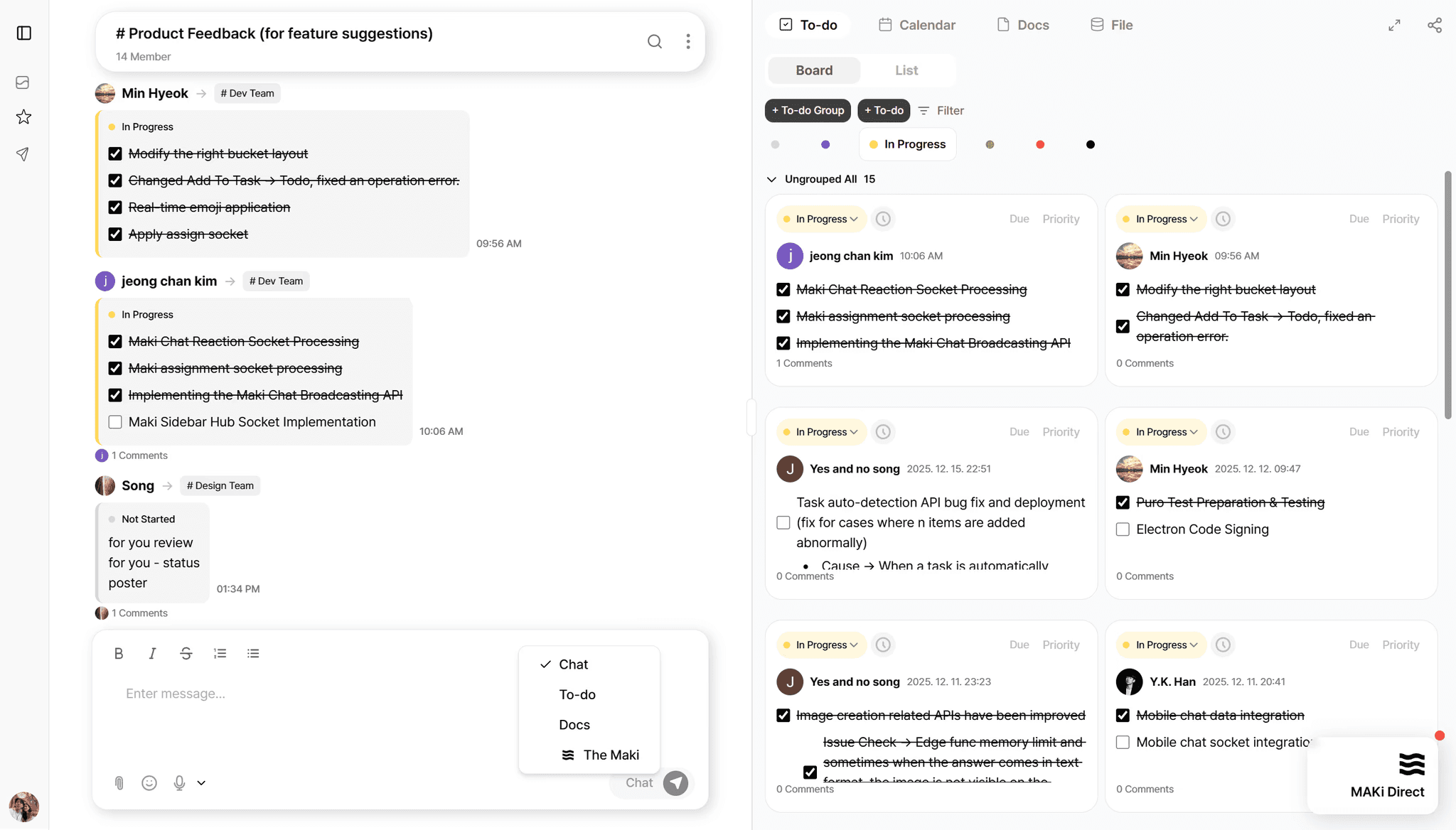
Teams that waste less time on task management share a few traits:
Tasks are created directly from conversations
Decisions don’t require separate documentation
Ownership is captured immediately
There’s minimal tool-switching
They don’t “manage tasks better.”
They reduce the need to manage tasks at all.
Less Task Management = More Execution
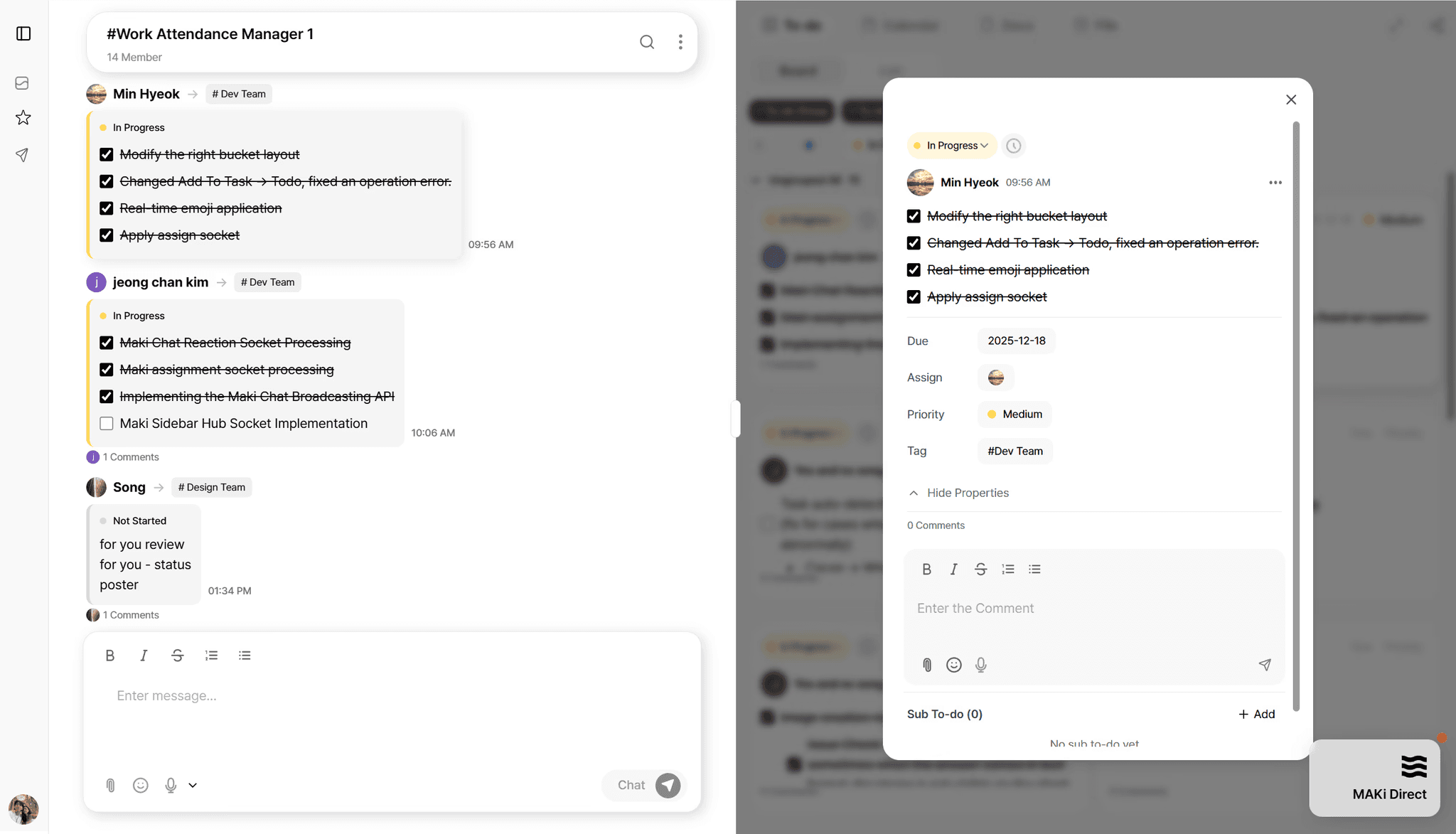
The goal isn’t perfect task boards.
The goal is momentum.
When teams stop spending hours organizing work, they gain:
Faster execution
Fewer follow-up meetings
Clearer accountability
More time for real problem-solving
Where MAKi Fits In
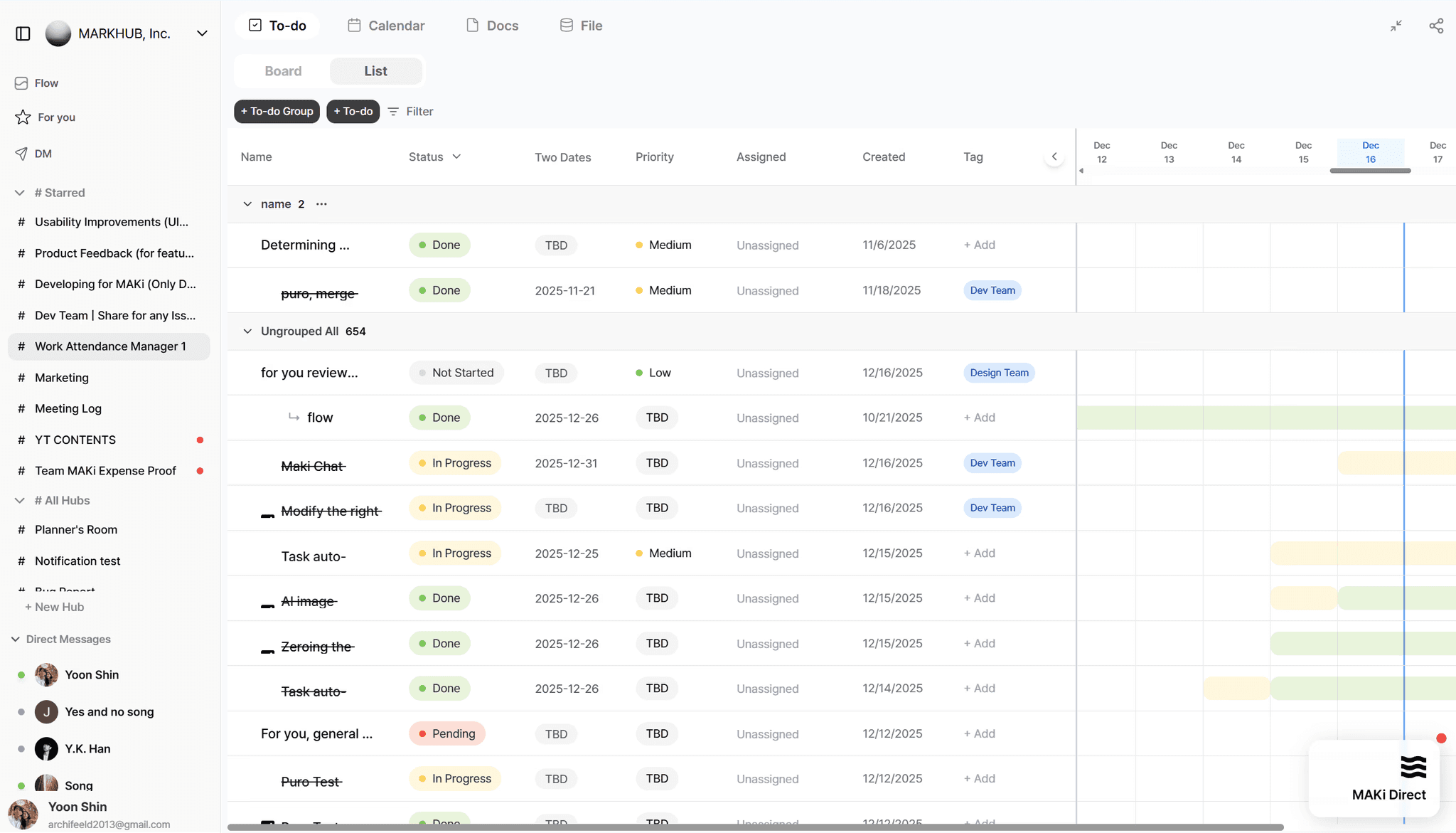
MAKi is built around a simple belief:
If work starts with conversation, execution should too.
Instead of forcing teams to translate conversations into tasks later, MAKi:
Captures decisions as they happen
Turns conversations into actionable to-dos
Keeps work moving without manual updates
No extra tools.
No copy-pasting.
No cleanup work.
The Bottom Line
Teams don’t waste time because they’re lazy or disorganized.
They waste time because their tools separate talking from doing.
The fastest teams don’t manage tasks more aggressively.
They make task management almost invisible.
That’s where real productivity comes from.