2025. 12. 5.
Project Management Automation: What Works and What Doesn’t
Project Management Automation: What Works and What Doesn’t
Project management automation is everywhere.
Every tool promises to save time.
Every AI claims to “manage projects for you.”
But for many teams, using AI for project management feels less like strategy
and more like rolling the dice.
Sometimes it works.
Sometimes it doesn’t.
And sometimes the mess just lands somewhere else.
Project management isn’t a dice game.
It’s not something you hand over to randomness and hope for the best.
So why does automation feel unpredictable
and what actually works versus what clearly doesn’t?
Let’s break it down.
Why Project Management Automation Is So Confusing
The problem isn’t AI.
The problem is what we try to automate and how much control we give up.
Most tools focus on automating outputs:
Dashboards
Reports
Status updates
Gantt charts
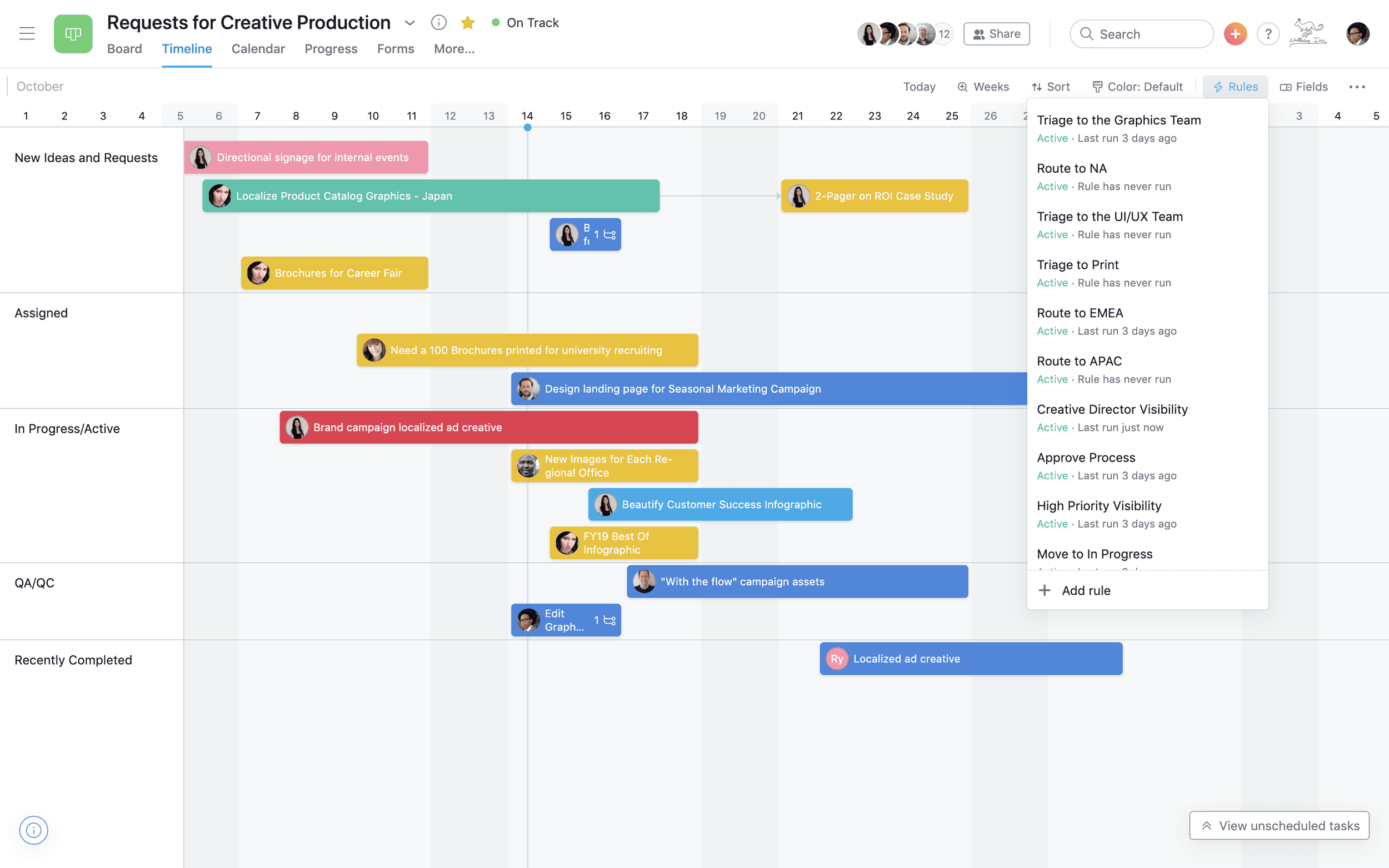
Ex) Asana
But PM pain doesn’t start there.
It starts much earlier inside conversations.
Automation that ignores this almost always fails.
What Project Management Automation Actually Works
1. Task Extraction from Conversations ✅
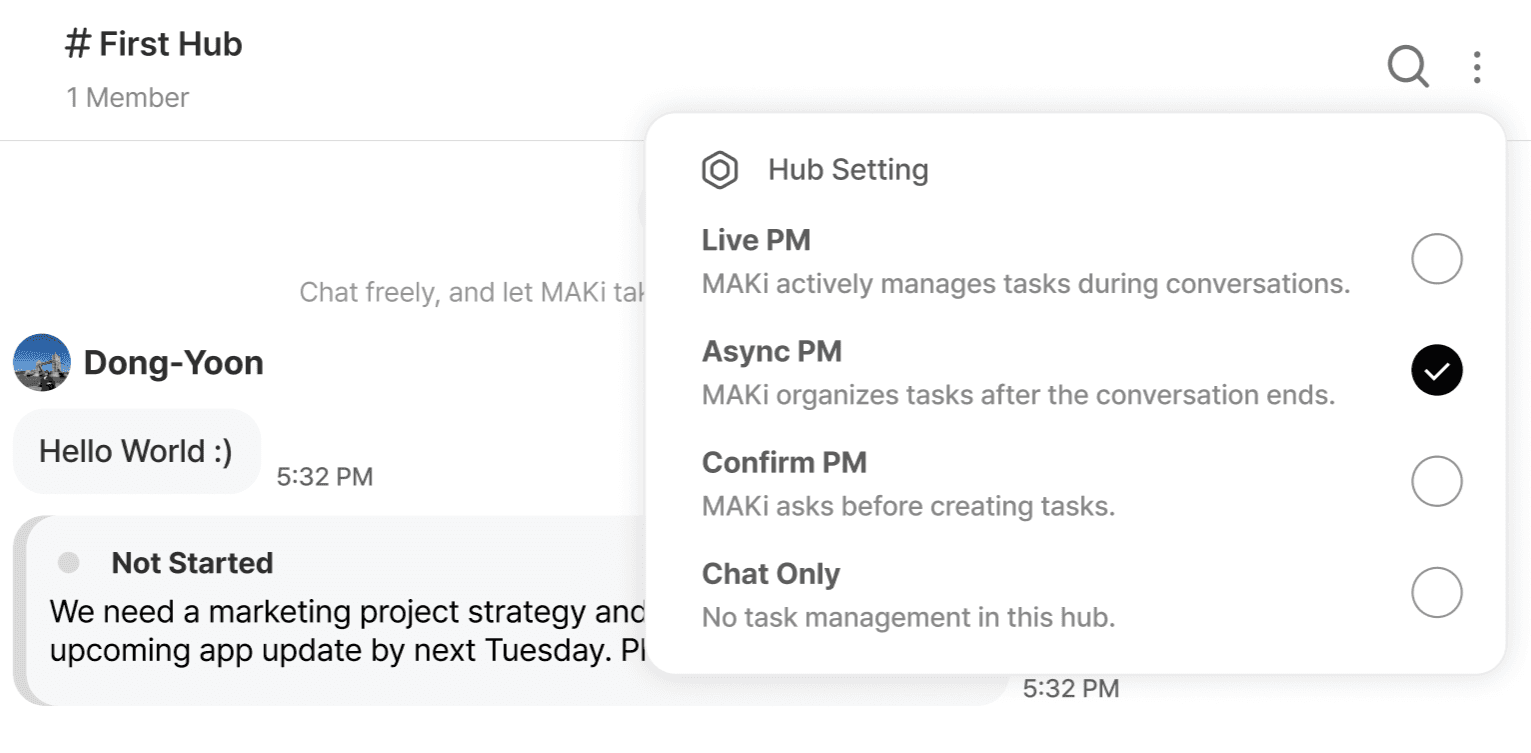
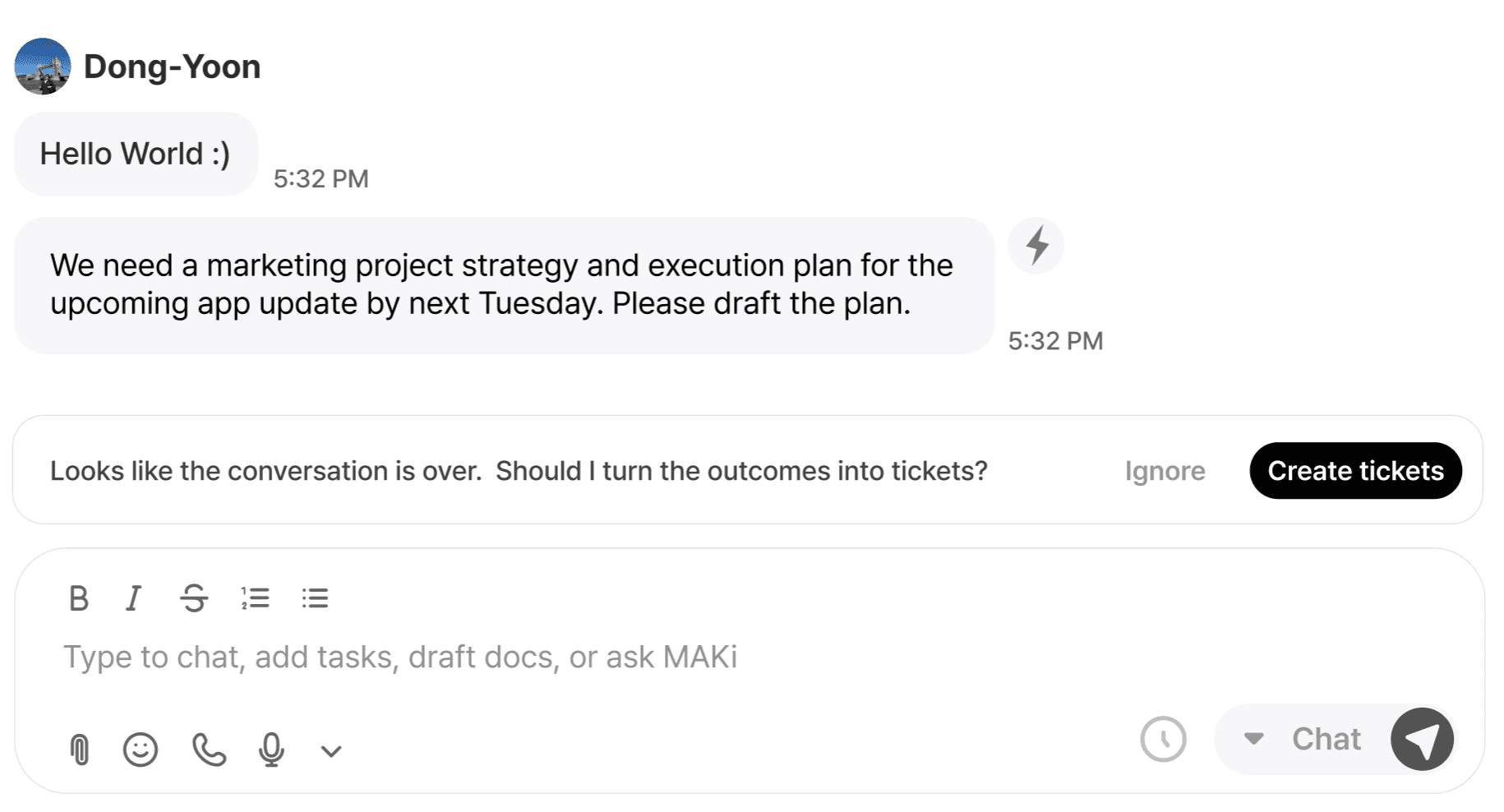
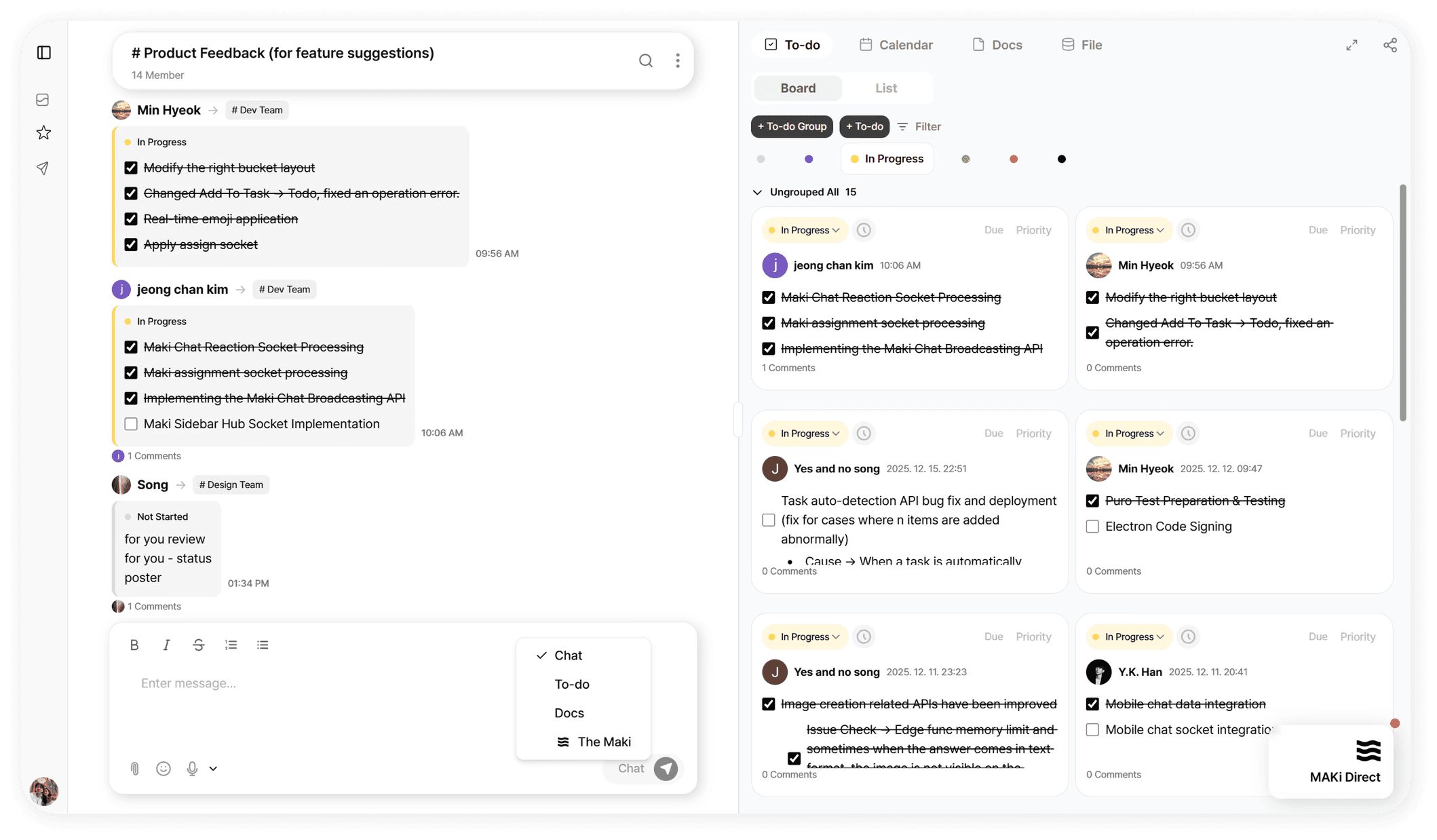
This is one of the highest-leverage automations.
Every meeting and chat already contains:
Action items
Owners
Deadlines
Manually extracting them is pure busywork.
Automation works when:
Tasks are detected directly from chat or meetings
Tickets are created without copy-pasting
Ownership is clear immediately
Automation fails when:
Users must manually “send to task tool”
Extra forms or steps are required
👉 If automation adds friction, people won’t use it.
2. Meeting Summaries (When Done Right) ✅
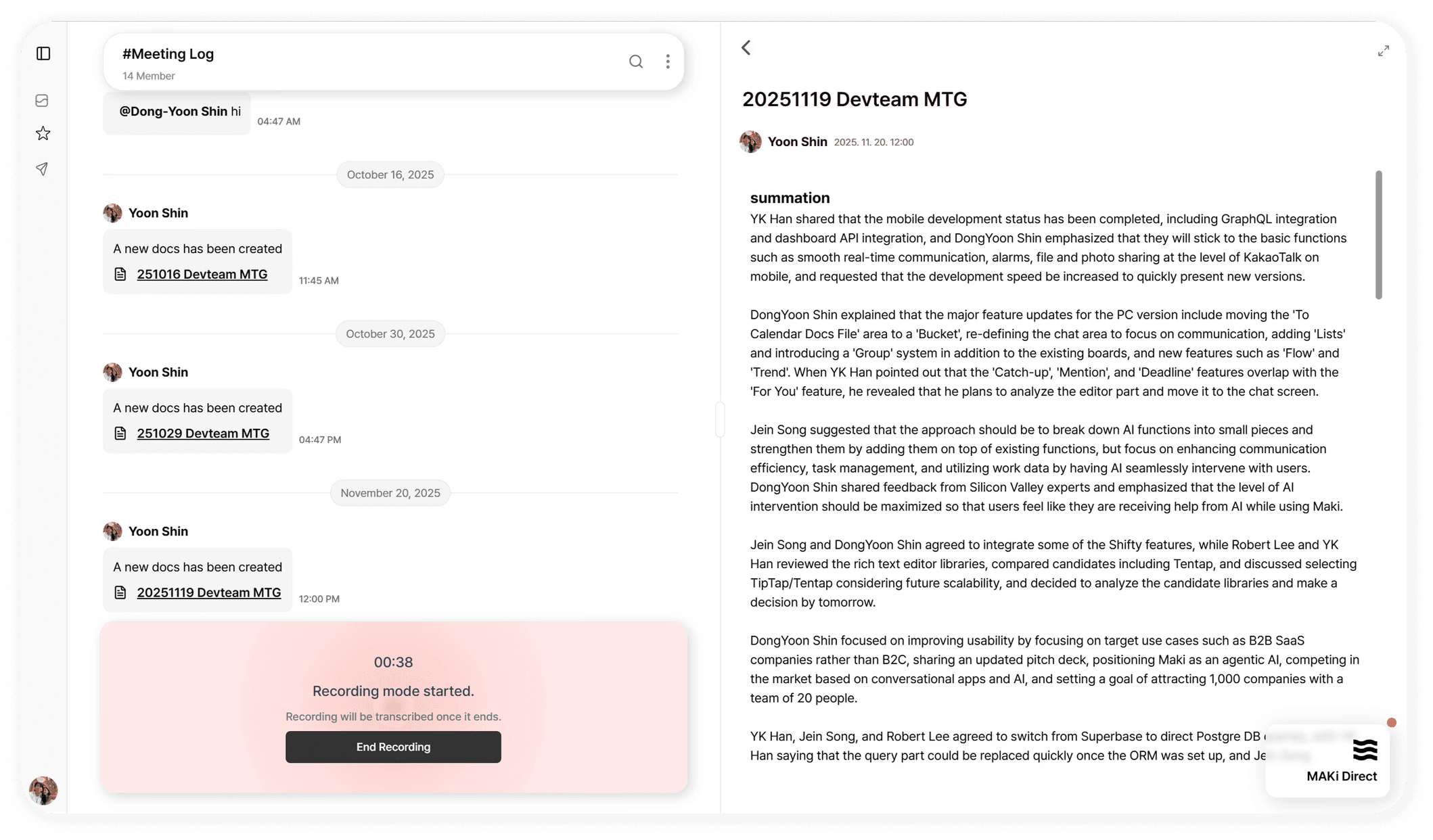
Meeting summaries work only if they’re timely and relevant.
What works:
Automatic summaries after meetings end
Clear decisions + next steps
Short, skimmable format
What doesn’t:
Long AI transcripts no one reads
Summaries detached from actual tasks
Delayed delivery hours later
Automation should close the meeting, not document it.
3. Status Tracking Without Manual Updates ✅
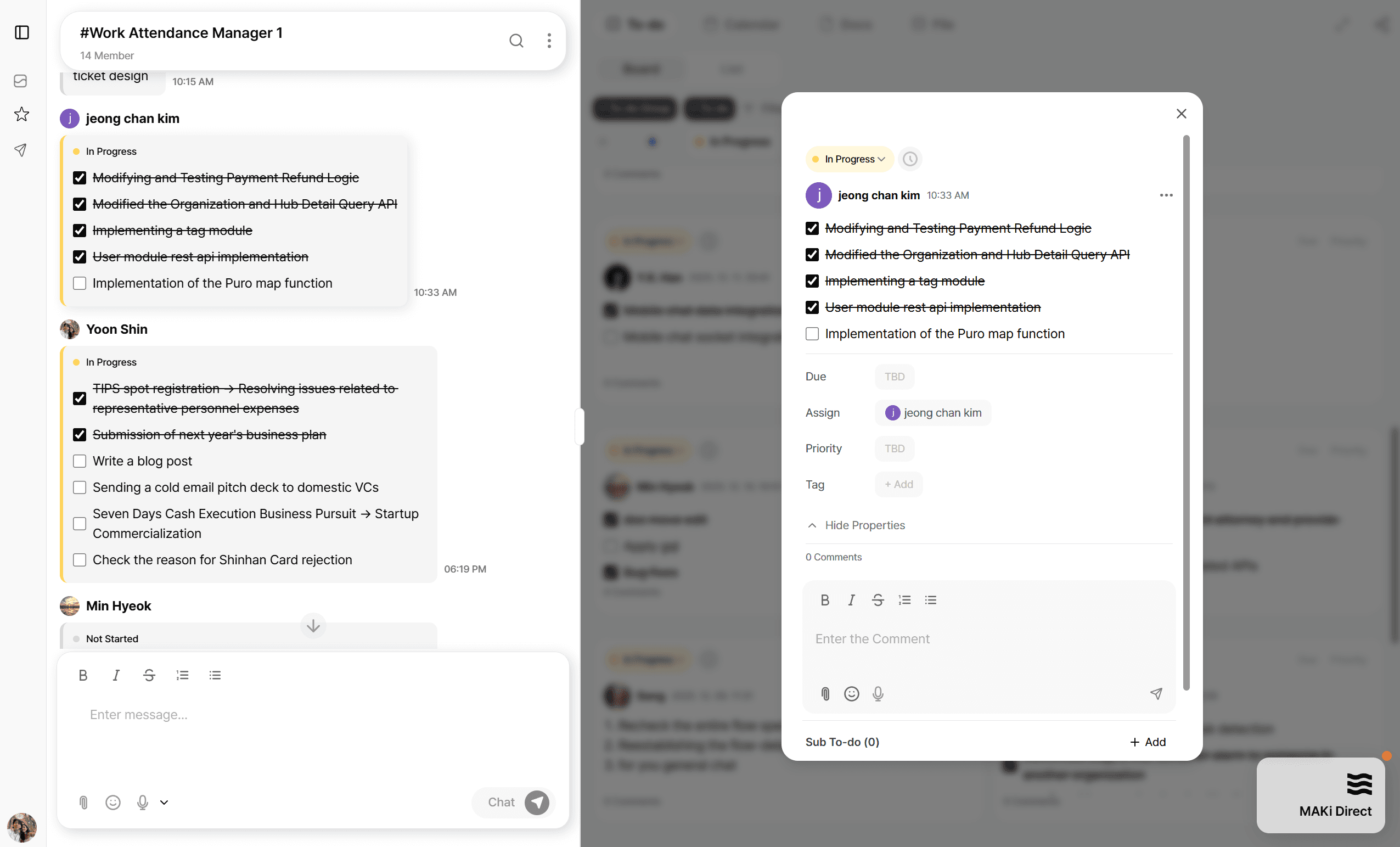
PMs shouldn’t ask:
“Can you update the board?”
Good automation:
Infers status from ongoing work
Updates visibility automatically
Reduces check-in meetings
Bad automation:
Requires people to constantly confirm status
Creates more notifications than clarity
Automation works when it removes reminders, not adds them.
What Project Management Automation Does NOT Work
1. Automating Judgment ❌
AI cannot decide:
What matters most
Which trade-off to accept
When to say no
Tools that pretend otherwise create:
False confidence
Bad prioritization
Frustrated teams
Automation should support decisions, not replace them.
2. Over-Automated Workflows ❌
Some tools try to automate everything:
Mandatory fields
Rigid pipelines
Forced processes
This usually leads to:
Workarounds
Shadow tools
Teams abandoning the system
If people feel managed by the tool, adoption dies.
3. Automation That Lives Outside the Conversation ❌
This is the biggest failure point.
When:
Chat is in one place
Tasks are somewhere else
Automation happens “after the fact”
PMs still end up translating between tools.
Automation that doesn’t live where work happens
creates more PM work, not less.
The Real Rule of Project Management Automation
Here’s the rule most teams learn the hard way:
Automate structure, not thinking.
Automate cleanup, not leadership.
The best automation:
Happens quietly
Feels invisible
Reduces cognitive load
If people have to “learn the automation,” it’s probably wrong.
Where Automation Should Start (Hint: It’s Not Dashboards)
Most PM tools start with:
Planning
Tracking
Reporting
But execution starts earlier.
👉 It starts with conversation.
That’s where:
Decisions are made
Commitments happen
Work is born
Automation that starts here changes everything downstream.
How MAKi Approaches Project Management Automation
MAKi was built around one simple principle:
If work starts with conversation, automation should too.
Instead of automating reports, MAKi automates the busywork PMs do after talking:
Detects tasks directly from chat
Creates structured to-do tickets automatically
Summarizes meetings when discussions end
Keeps execution visible inside the messenger
No extra dashboards.
No process change.
No PM cleanup work.
Automation works best when it feels like nothing happened except less work.
The Bottom Line
Project management automation isn’t about replacing PMs.
It’s about removing the parts of the job that:
Don’t require judgment
Don’t create leverage
Should never have existed in the first place
Teams that automate the right things move faster.
Teams that automate everything get stuck.
The future of project management isn’t more tools.
It’s less manual coordination after conversations.
👉 Want to see what project management automation actually looks like in practice?
MAKi helps teams turn conversations into execution
without automating the wrong things.