2025. 11. 29.

Slack Alternative for Teams That Actually Need Execution
Slack changed how teams communicate.
But communication is not execution.
If your team uses Slack every day yet still misses deadlines, forgets follow-ups, or loses decisions, the problem isn’t your people. It’s the gap between talking and doing.
This is why more teams are actively searching for a Slack alternative that actually helps work get done.
Slack Is Great for Talking And That’s the Problem
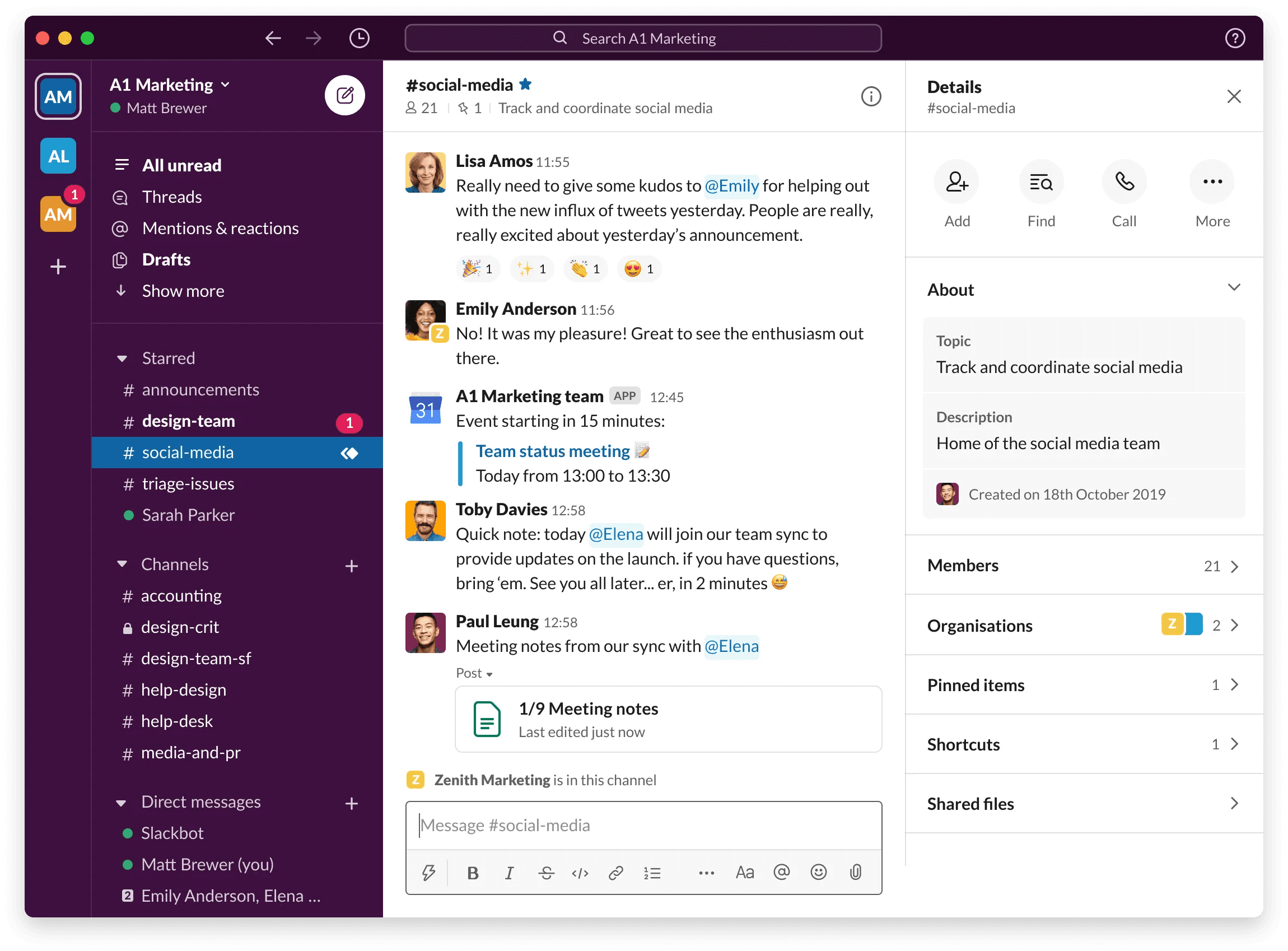
Slack excels at real-time conversation:
Fast messaging
Channels and threads
Notifications and reactions
But when work gets complex, Slack starts to show its limits.
What usually happens:
Important tasks are buried in chat history
Decisions get lost between messages
Someone says “I’ll take this” and nothing happens
PMs manually turn conversations into tasks, documents, and follow-ups
Slack wasn’t built to manage execution.
It was built to enable conversation.
Why Teams Outgrow Slack
Most teams don’t abandon Slack because they hate it.
They outgrow it.
Here are the most common reasons teams start looking for a Slack alternative:
1. Too Much Talking, Not Enough Progress
Slack increases message volume, but progress still depends on someone manually organizing everything afterward.
2. Work Lives Outside the Chat
Tasks live in Jira.
Docs live in Notion.
Schedules live in calendars.
Slack becomes a noisy hallway between tools.
3. PMs Become Human Glue
Project managers spend hours:
Reading chat logs
Extracting action items
Writing follow-ups
Reminding people what they already agreed on
This is expensive, slow, and exhausting.
What Teams Actually Need (But Slack Doesn’t Offer)
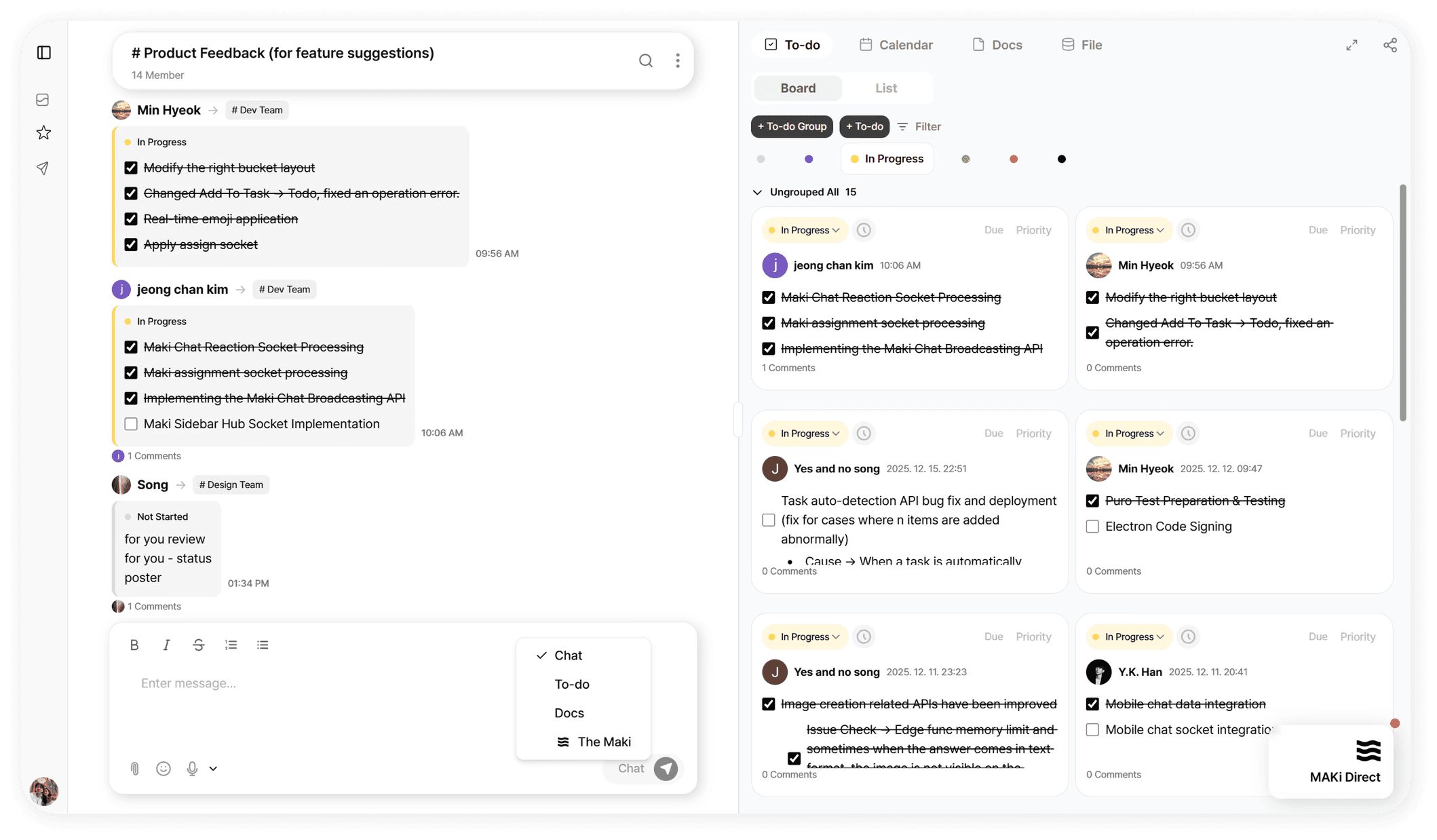
Teams don’t need another chat app.
They need execution built into conversation.
A real Slack alternative should:
Detect tasks from conversations automatically
Turn decisions into trackable work
Organize outcomes after meetings and discussions
Reduce manual PM busywork
Work without forcing teams to change how they talk
In short:
Conversation should create execution by default.
From Messenger to Built-In PM
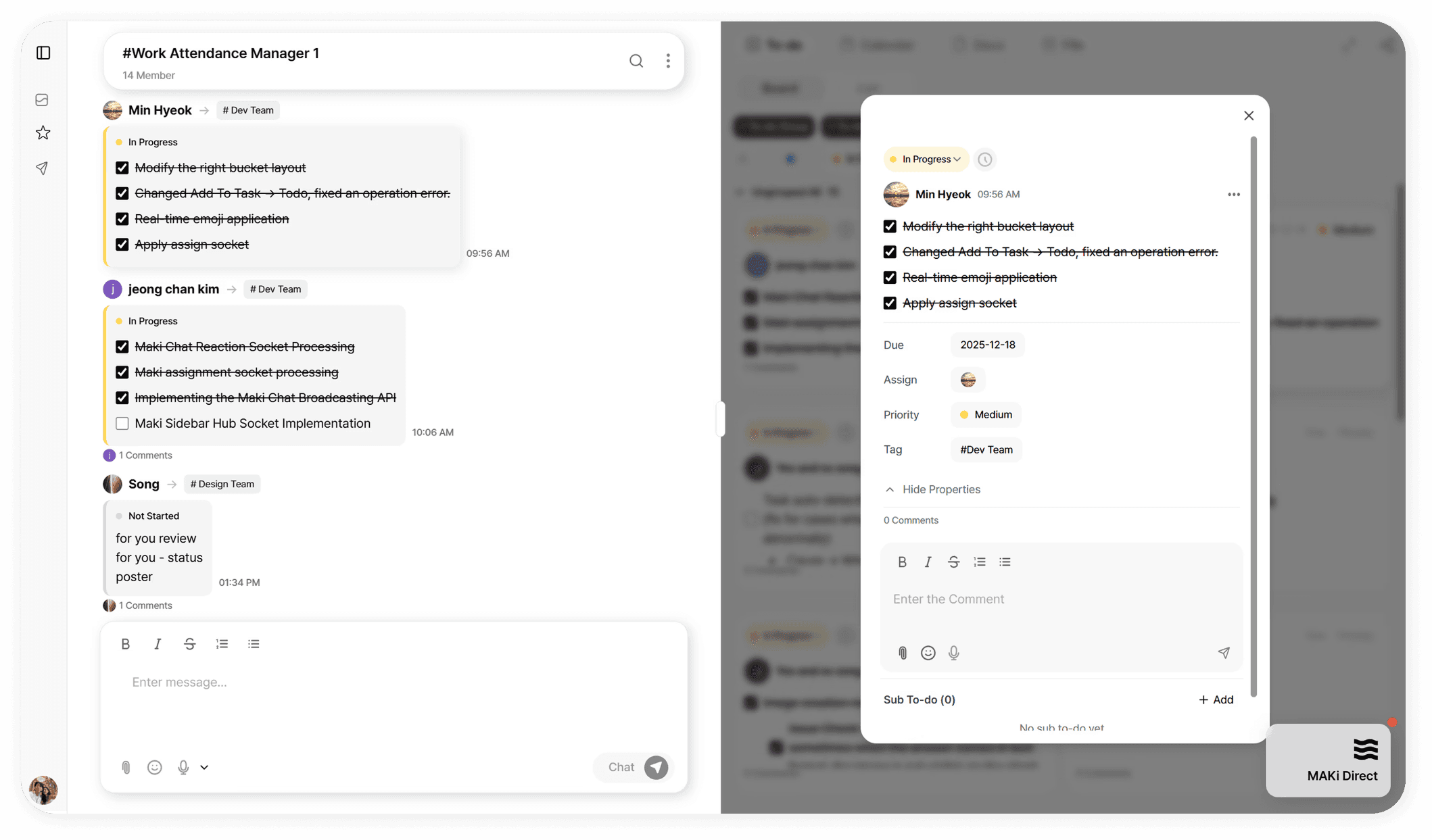
This is where tools like MAKi take a fundamentally different approach.
Instead of asking:
“How do we make chat better?”
MAKi asks:
“What should happen after people talk?”
What’s different?
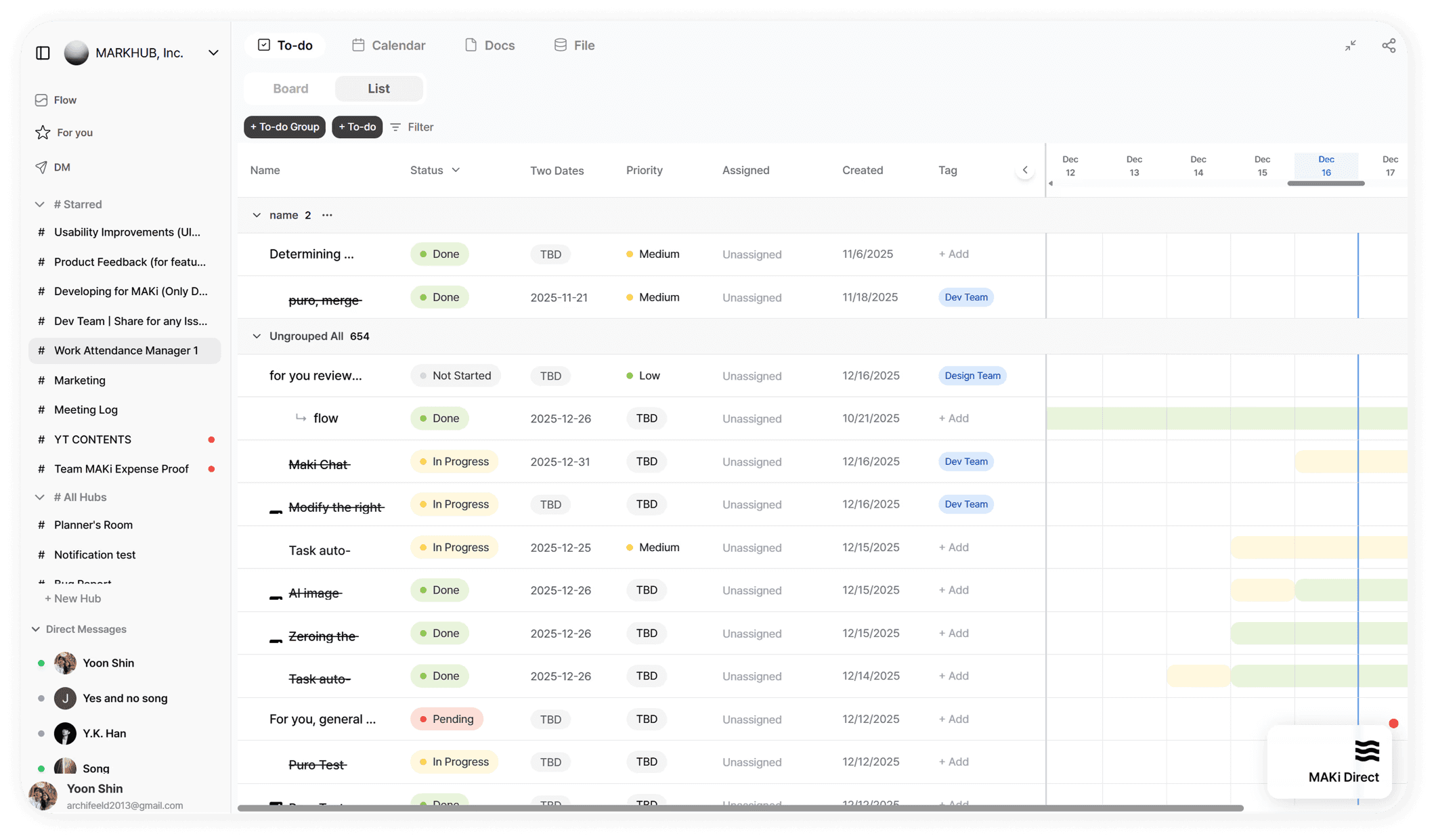
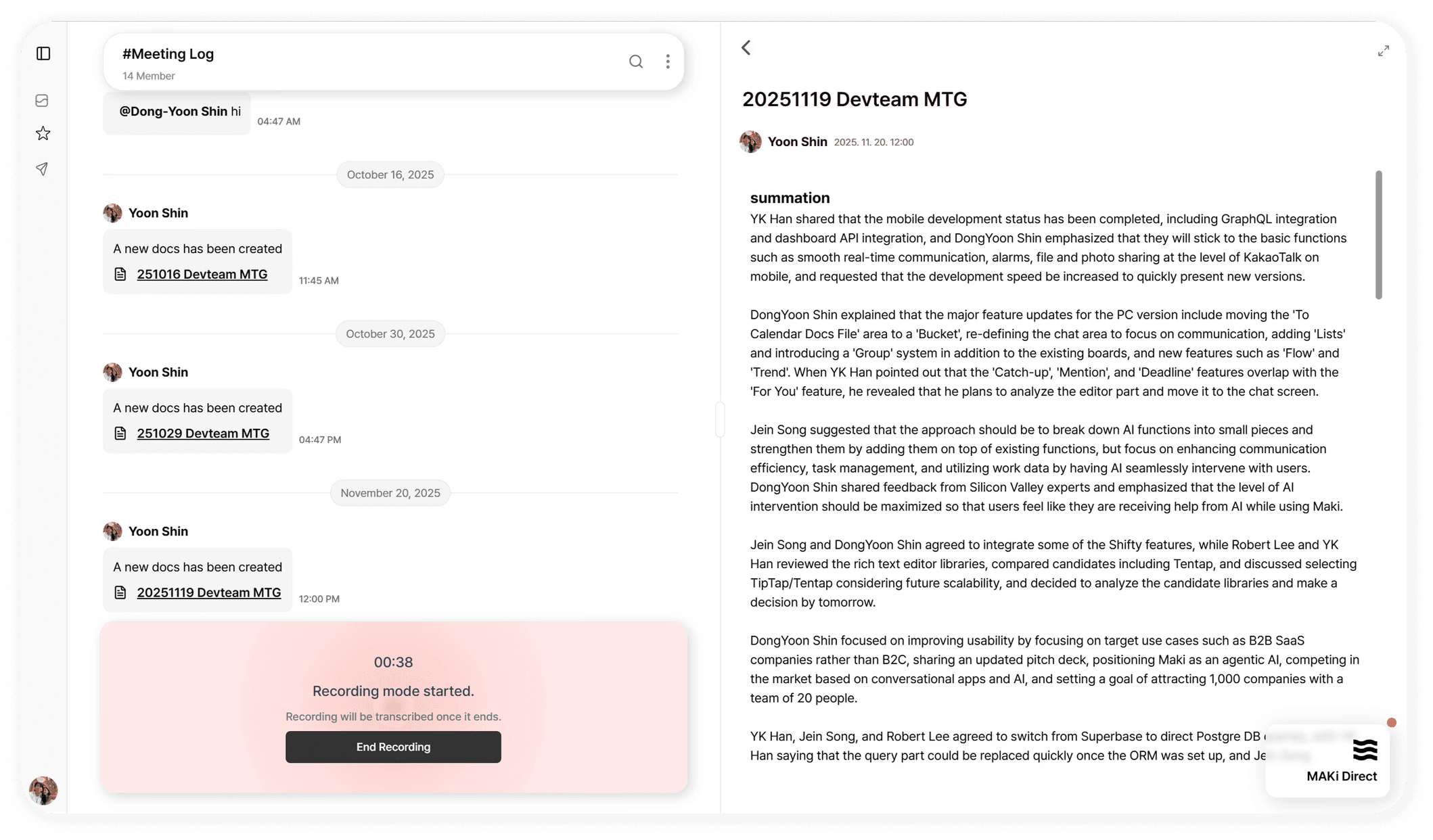
Conversations automatically become to-do tickets
Meetings are wrapped into decisions and next steps
AI acts like a PM, not a chatbot
Teams stop switching between Slack, Notion, Jira, and spreadsheets
You don’t manage work after chatting.
Work is managed inside the chat.
How Much Does Slack Actually Cost Your Team?
Slack itself may be affordable.
The hidden cost is everything it doesn’t do.
Consider this:
A PM spends 10–15 hours/week organizing chat outcomes
Meetings require follow-up docs and task creation
Missed tasks lead to delays, rework, and more meetings
For many teams, the real cost of Slack isn’t the subscription.
It’s the lost execution time.
Replacing Slack with an execution-first messenger can easily save:
5–10 hours per team per week
Thousands of dollars per month in coordination overhead
When a Slack Alternative Actually Makes Sense
A Slack alternative isn’t for everyone.
But it does make sense if your team:
Runs projects, not just conversations
Has frequent meetings and follow-ups
Relies on PMs or team leads to track work
Feels overwhelmed by too many tools
Wants execution without more process
If your team keeps saying:
“Let’s follow up later”
You don’t need more reminders.
You need a system that turns that sentence into action.
The Bottom Line
Slack is a great messenger.
But modern teams need more than messaging.
They need a tool where:
Talking leads to doing
Decisions don’t disappear
PM work is automated, not multiplied
That’s why teams that actually care about execution are moving beyond Slack.
👉 Looking for a Slack alternative that turns conversations into work?
MAKi is built for teams that don’t just talk they execute.